array类实现了数组中元素的冒泡排序。sort()方法要求数组中的元素实现icomparable接口。如system.int32
和system.string实现了icomparable接口,所以下面的数组可以使用array.sort()。
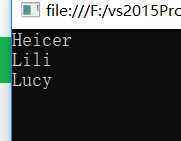
string[] names = { "lili", "heicer", "lucy" };array.sort(names);foreach (string n in names) {console.writeline(n);}输出排序后的数组:
如果对数组使用定制的类,就必须实现icomparable接口。这个借口定义了一个方法compareto()。
person类
public class person : icomparable { public person() { } public person(string name, string sex) { this.name = name; this.sex = sex; } public string name; public string sex; public override string tostring() { return this.name + " " + this.sex; } #region icomparable 成员 public int compareto(object obj) { person p = obj as person; if (p == null) { throw new notimplementedexception(); } return this.name.compareto(p.name); } #endregion }这里就可以对person对象数组排序了:
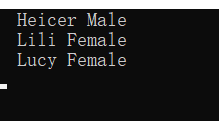
person[] persons = { new person("lili", "female"), new person("heicer", "male"), new person("lucy", "female") }; array.sort(persons); foreach (person p in persons){ console.writeline(p); }
排序后的结果:
如果person对象的排序方式不同,或者不能修改在数组中用作元素的类,就可以执行icompare接口。这个接口定
义了compare()方法。icompare接口必须要独立于要比较的类。这里定义personcompare类
personcompare类
public class personcomparer:icomparer { public personcomparer() { } #region icomparer 成员 public int compare(object x, object y) { person p1 = x as person; person p2 = y as person; if (p1 == null || p2 == null) { throw new argumentexception("person为空"); } return p1.name.compareto(p2.name); } #endregion } 现在,可以将一个personcomparer对象传送给array.sort()方法的第二个变元。
array.sort(persons, new personcomparer());
结果是就不输出了。
另外sort()方法也可以把委托作为参数:
pulic delegate int comparison<</span>t>(t x, t y);
对于person对象数组,参数t是person类型:
array.sort(persons, delegate(person p1, person p2) {
return p1.name.compareto(p2.name);});
或者可以使用λ表达式传送两个person对象,给数组排序:
array.sort(persons, (p1, p2) => p1.name.compareto(p2.name));
结果同样就不输出了。
【说明】:本文章由站长整理发布,文章内容不代表本站观点,如文中有侵权行为,请与本站客服联系(QQ:254677821)!